You’re scrolling through Instagram, stopping first for a video of a regular person unboxing a skincare product in their bathroom, laughing about a clumsy mistake they made. A few posts later, a polished, high-production-value video ad pops up from the same brand, featuring dramatic lighting and a celebrity voiceover.
Which one do you watch longer? Which one makes you want to hit “Buy Now”?
If you said the unboxing video, you’re not alone.
In the battle for modern consumer attention, the rules of engagement have completely shifted. Traditional brand ads—once the undisputed kings of marketing—are increasingly being overshadowed by User-Generated Content (UGC). But does that mean studios and creative agencies are out of a job? Not quite.
Let’s dive deep into the UGC vs. brand ads debate, look at the data, and discover how to strike the ultimate marketing balance to drive maximum engagement.
What is UGC and Why is it Taking Over?
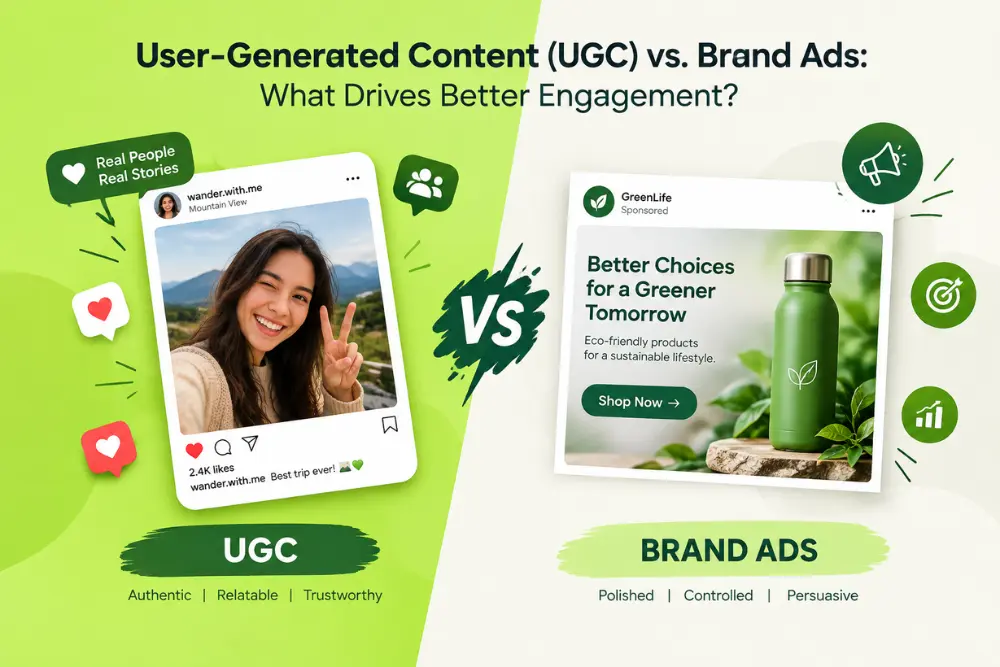
User-Generated Content (UGC) refers to any form of content—text, videos, reviews, images, podcasts—created by everyday consumers or creators rather than the brand itself.
Think of TikToks featuring product reviews, honest Twitter threads about a bad customer service experience, or Instagram Reels of customers showing off their new outfits.
Why UGC Dominates Engagement:
- The Trust Factor: Consumers are inherently skeptical of brands. When a brand says, “Our product is the best,” audiences hear, “Buy our stuff.” When a real user says, “This product changed my morning routine,” audiences hear, “Here is an honest recommendation.”
- Relatability: UGC doesn’t look like an ad; it looks like organic content. Because it blends seamlessly into social media feeds, users don’t instantly put up their “ad-blocker” mental guards.
- Cost-Effectiveness: Producing studio-grade commercials requires hefty budgets. UGC can often be sourced organically from loyal customers or commissioned through affordable creator partnerships.
The Case for Brand Ads: Precision and Polish
While UGC wins on authenticity, Brand Ads (studio-produced, highly curated promotional material) still hold a powerful place in the marketing ecosystem.
| Feature | Brand Ads |
| Production Quality | High (Professional gear, lighting) |
| Message Control | Absolute (Strictly on-brand) |
| Best For | Brand awareness & prestige |
Why Brand Ads Still Matter:
- Brand Authority and Credibility: A sleek, high-end commercial tells consumers that your brand is established, professional, and reliable. Luxury brands like Rolex or Apple rely on high-production ads to communicate prestige.
- Absolute Control: With brand ads, every single frame, word, and color is meticulously crafted to align with brand guidelines. There’s no risk of a creator going off-script or missing a key product feature.
- The “Big Picture” Impact: Brand ads are phenomenal for top-of-funnel mass awareness, establishing emotional connections through cinematic storytelling.
UGC vs. Brand Ads: Head-to-Head Engagement Metrics
When it comes to raw engagement—likes, comments, shares, and conversions—how do the two formats stack up? The data tells a compelling story:
- Click-Through Rates (CTR): According to various industry studies, ads featuring UGC generate 4x higher click-through rates and a 50% drop in cost-per-click (CPC) compared to average traditional ads.
- Consumer Trust: Nielsen reports that 92% of consumers trust recommendations from other people (even complete strangers) over content coming directly from brands.
- Memory Retention: Consumers, particularly Gen Z and Millennials, experience “ad fatigue.” Because UGC feels native to platforms like TikTok and Instagram, users watch it longer, leading to better brand recall.
How to Combine UGC and Brand Ads for Maximum ROI
The most successful modern marketers aren’t choosing one over the other—they are blending them together. Here is how you can leverage both to supercharge your engagement:
1. Use UGC for the Funnel, Brand Ads for the Foundation
- Top of Funnel (Awareness): Use sleek brand ads to establish your identity, ethos, and visual style.
- Middle & Bottom of Funnel (Consideration & Conversion): Retarget warm audiences with UGC showing real-life applications, social proof, and honest reviews to push them over the finish line.
2. Turn UGC into Brand Ads (Whitelisting)
Some of the highest-performing ads today are simply organic UGC pieces turned into paid advertisements (spark ads on TikTok or branded content on Meta). You get the high trust of UGC combined with the hyper-targeting power of paid brand ads.
3. Incentivize Your Community
Encourage your existing customers to create content for you. Run hashtag challenges, offer loyalty points for video reviews, or create a creator affiliate program. Your community is your most powerful marketing department.
Final Thoughts:
At the end of the day, marketing is about human connection. While brand ads give you a microphone to broadcast your message, UGC invites your audience into a conversation.
If you want to drive higher engagement, lower your acquisition costs, and build a fiercely loyal customer base, it’s time to let your customers do the talking.